[Archive Home][Date Prev][Date Next][Index]
"Jammed jets, higher fares add to summer flying woes"
Friday, June 13, 2008
Jammed jets, higher fares add to summer flying woes
By Nathan Hurst
The Detroit (MI) News
ROMULUS--That summer flight to Boston for the family reunion you booked two
months ago cost 2 1/2 times what you paid last year, and the pain of your
summer trip by air has just begun.
On the day of your flight, you haul two suitcases to the airport, and get
stuck paying $25 to check the second one (at least you didn't fly American
or United, which will soon start charging $15 for your first checked bag).
You queue up at the security checkpoint, which is clogged with rookie fliers
trying to decipher rules for carry-on luggage.
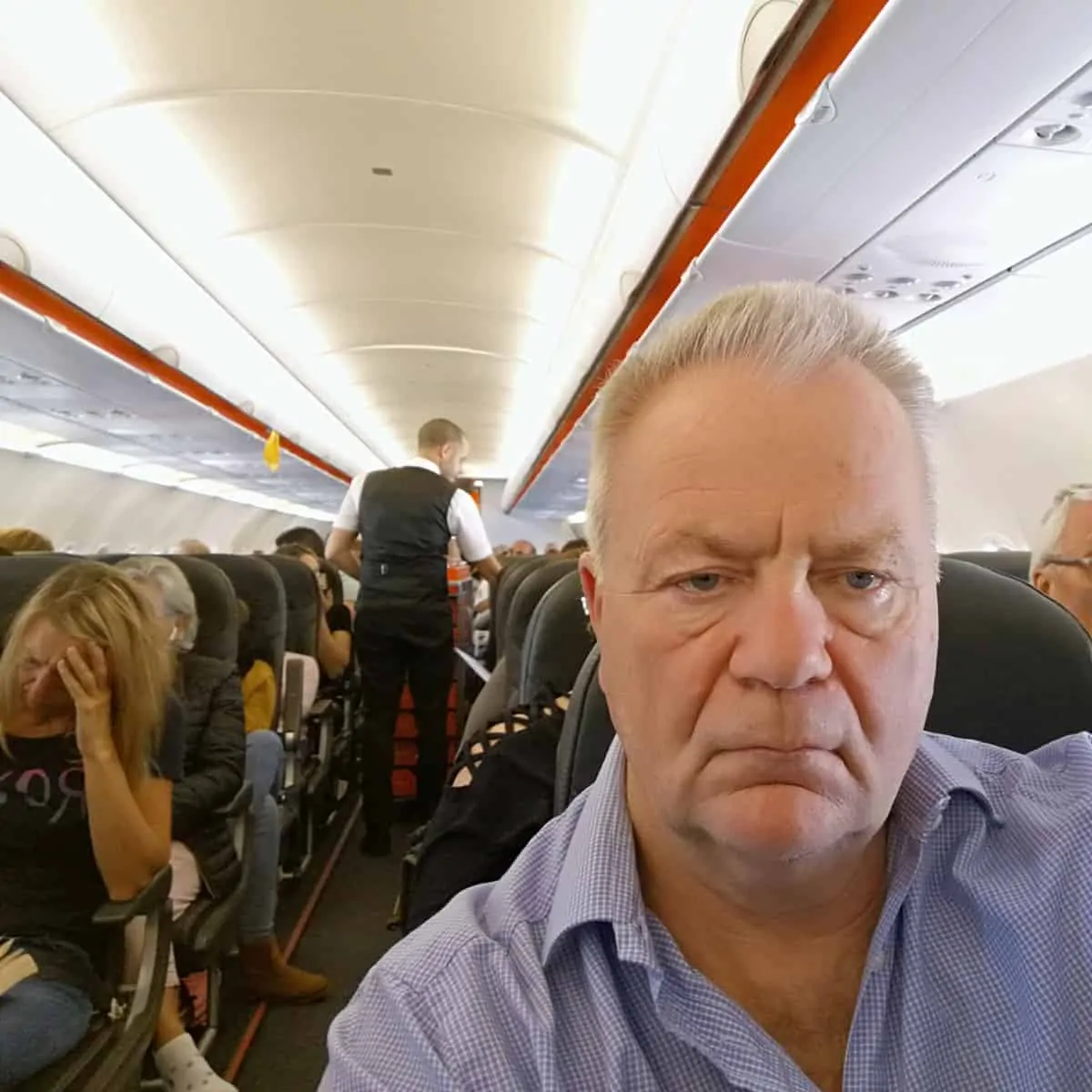
Finally onboard, you're stuck in a middle seat (you decided not to pay an
extra $30 for the exit row or $25 for the aisle) on a full flight and had to
squeeze your carry-on underneath the seat because the overhead bins were
full.
After taxiing out to the runway, the flight is delayed because of a summer
thunderstorm, but the pilot doesn't turn on the air conditioning because the
jet fuel used to run the engines is so expensive. After the plane finally
takes off, you find the once-free trail mix is now $3 (it was $2 just a few
months ago), and after all the hassles, you're more than willing to shell
out the extra $5 for a nerve-calming plastic cup of wine.
Sound familiar?
Flying hassles certainly aren't new. Jams at security checkpoints and flight
delays have been commonplace for years now. But this summer promises to be
one of the most angst-filled ever for U.S. airline passengers, as an
industry in crisis looks for ways to boost revenue and cut costs to deal
with jet fuel that has more than doubled in price in the past year.
The result for consumers, experts say, is a new era of getting less for more
money.
Not only are airlines raising fares and fees, but they're also cutting
flights and jobs, meaning crowded planes and overworked employees. Just this
week, United announced it would start charging $15 for checking a first bag
on domestic flights, Continental announced major flight cuts beginning in
the fall, and the major carriers upped their fuel surcharges another $20.
"They're getting you everywhere," said Austin Kelleher, 27, a financial
analyst from New York who flies often to Detroit. "No more $100 round-trip
tickets where you get the whole row."
Rick Seaney, CEO of FareCompare.com, said this season of expensive, crowded
flights won't end until oil prices fall. "It's looking to be a rough one,"
he said.
Affordable fares disappear
Decades ago, only the well-off could afford to fly frequently. That changed
in the 1980s, when deregulation created fierce competition between the
legacy carriers and upstart discounters, leading to fares the masses could
afford.
Those days may be over soon.
While the demand for airline tickets hasn't fallen much, especially among
business travelers, it could soon among leisure fliers as more Americans are
priced out of the market. Pinched household budgets add to that likelihood.
Kelleher said high ticket prices are limiting his once-frequent trips to
visit family in Grosse Pointe.
"I was paying $175 round-trip last summer, and now it's up to $300 if I want
to go at convenient times," Kelleher said after checking in for a recent
flight to New York. "I can't really blame the airline, but it's hard not
getting anything extra even though you're paying more."
There still are some good deals to be had -- if a traveler is willing to
consider off-time flights or those with multiple connections.
"Convenience costs more these days," Seaney said. "Because as they're
pulling seats out of the system, the cheap ones are the first to go."
Fees pile up
In recent months, airlines, desperate to recoup fuel costs but wary of
raising fares too much, sniffed out other sources of revenue -- fuel
surcharges and fees.
The surcharges are up to $426 on some round-trip tickets to the United
Kingdom, and fees have been started or raised on everything from second bags
to pets to children traveling alone.
Sisters Vicki Crouse and Sue Horchem of Peoria, Ill., were stuck paying $25
each for bowling bags they brought to Metro Detroit recently to participate
in the United States Bowling Congress national championships in Canton.
"If it wasn't a surcharge for the bags, it'd just be added onto the
tickets," Crouse said. "You're going to pay more one way or another."
Flights get more crowded
Airlines have started cutting flights and say more will go this fall, which
means planes will be crowded and stay crowded. Airlines are reporting
record-high load factors -- the percentage of seats on a plane that are
filled. And that means it will be even harder to snag a seat on another
flight if your flight is canceled.
That's what happened to Kelley Fleckenstein and her husband and two sons
when they tried to leave Sunday from Metro Airport. A combination of
mechanical difficulties and bad weather canceled their evening Northwest
flight, a nonstop return home to Richmond, Va.
Because it was so late, the family had to spend the night in Detroit and try
to get another flight Monday, forcing the adults to miss a day of work and
the boys the first day of a sports camp. But flights to Richmond were booked
full.
The family ended up joining forces with another, the Shugarts from Richmond,
and found seats on a flight to Washington, D.C., where they planned to rent
a car for the two-hour drive home.
Passengers deal with delays
Even if you avoid a canceled flight, your odds of dodging a delayed flight
are much less. At the end of 2007, about 71 percent of airline flights were
on time, down from a high of 83 percent in 2002.
The potent combination of crowded planes and thunderstorms is a particular
problem in the summer, making for lengthy waits in the airport, or worse, on
a stuffy, cramped airplane sitting on the tarmac.
Also a problem, according to Air Transport Association spokesman David
Castelveter, is chronic air traffic congestion in busy areas along the East
Coast, where delays and cancellations can ripple through the rest of the
system.
"There's a lot of work being done to try to alleviate the problem,"
Castelveter said. "But crowding at some of the larger airports in the East
is still a major delay issue."
Tighter security alters plans
No one will argue the need for tighter airport security in the wake of the
deadly Sept. 11, 2001, terrorist attacks, but it has changed Americans'
flying experience, and not for the better.
Fliers have learned to arrive early to the airport, especially during busy
morning and evening hours, to allow extra time to navigate security.
That process can be particularly slow in the summertime, when leisure fliers
who travel infrequently often don't obey the long list of rules.
Adding to security delays recently has been new, still-unfamiliar equipment
installed in airports around the country, including explosive-detecting
machines that blow puffs of air on travelers and full-body scanners.
Elio Montenegro, a TSA spokesman, said his agency is doing what it can to
reduce security line hassles, including new efforts such as "expert
traveler" lines that let fliers who know the ropes move ahead of
stroller-toting families with lots of baggage.
Air travelers' complaints stem from a feeling that the value of air travel
has declined, with even small comforts like blankets and pillows becoming
rare, said Minneapolis-based travel expert Terry Trippler, founder of
TripplerTravel.com.
"With oil going up, people are paying more to fly. It's becoming a luxury
again," Trippler said. "But they also feel that in paying more, they should
get more, and that's certainly not the case."
Fleckenstein, the mother of two from Richmond, said her troubles were
irritating, if not expected.
"The airlines are cutting costs so much," she said. "I'm just happy we're
fairly seasoned travelers. This would be a nightmare if you don't know what
you're doing."
Do you have an opinion about this story?
Share it with other readers in our CAA Discussion Forums
http://www.californiaaviation.org/dcfp/dcboard.php
*****************************************
Fair Use Notice
This site contains copyrighted material the use of which has not always been specifically authorized by the copyright owner. We are making such material available in our efforts to advance understanding of political, human rights, economic, democracy and social justice issues, etc. We believe this constitutes a 'fair use' of any such copyrighted material as provided for in section 107 of the US Copyright Law. In accordance with Title 17 U.S.C. Section 107, the material on this site is distributed without profit to those who have expressed a prior interest in receiving the included information for research and educational purposes. For more information go to: http://www.law.cornell.edu/uscode/17/107.html. If you wish to use copyrighted material from this site for purposes of your own that go beyond 'fair use', you must obtain permission from the copyright owner.
If you have any queries regarding this issue, please Email us at stepheni@cwnet.com