|
![Rep. Jim Oberstar, chairman of the House Transportation and Infrastructure Committee, wrote the law enacting the program in 1978 to prevent airlines from abandoning small communities. "This is a compact of rural America with urban America," he says.]()
|
|
|
|
![http://images.usatoday.com/_common/_images/clear.gif]()
|
|
Rep. Jim Oberstar, chairman of
the House Transportation and Infrastructure Committee, wrote the law
enacting the program in 1978 to prevent airlines from abandoning small
communities. "This is a compact of rural America with urban
America," he says.
|
|
|
![Patsy Mitchell, front, and Holly Deuser have plenty of room to stretch out on a nearly empty flight from Macon, Ga., to Atlanta Hartsfield-Jackson International Airport.]()
|
|
|
|
![http://images.usatoday.com/_common/_images/clear.gif]()
|
|
Patsy Mitchell, front, and
Holly Deuser have plenty of room to stretch out on a nearly empty
flight from Macon, Ga., to Atlanta Hartsfield-Jackson International
Airport.
|
|
|
Imagine an aviation
system in which planes fly two-thirds empty, fares are as low as $46 and the
government pays up to 93% of the cost of a flight.
You don't
have to look far. That system exists in the USA — and quietly is
expanding even as most of the nation's 2 million daily air travelers see
fares tick upward for increasingly crowded flights.
Each day,
about 3,000 passengers enjoy mostly empty, heavily subsidized flights,
financed by a 30-year-old program that requires the government to guarantee
commercial air service to scores of small communities that can't support it
themselves.
LOOK
BACK: How subsidies worked in 2006
The
Department of Transportation (DOT) pays a few small airlines $110 million a
year total so they can profitably carry as few as four passengers per day to
nearby hubs, often for rock-bottom fares. For example, a round-trip in
Montana from Miles City to Billings — a two-hour drive away —
costs passengers just $88 with a 30-day advance purchase on Big Sky Airlines
because the government kicks in $779.
Flying
round-trip from Lewistown, Mont., to Billings — also a two-hour-drive
— costs $88 as well on Big Sky. The government cost: $1,343 per
passenger. Just two people a day took the Lewistown-to-Billings flights on
average in 2006, according to the DOT.
The
subsidy program has drawn steady criticism — namely from DOT
administrators, who say it wastes money by providing what amounts to luxury
travel to people within driving distance of a larger airport. But the
subsidies have expanded in recent years, thanks to strong backing from
Congress, airlines and airports.
Two weeks
ago, lawmakers allocated another $110 million for 2008, rejecting proposed
DOT cuts. They also blocked the department from requiring 10 communities to
pick up a small portion of the cost as part of an effort to prod local
officials to better promote flights and draw more passengers.
Supporters
say the Essential Air Service program helps economic development by providing
"airline access to rural and isolated rural communities," as
Congress wrote in a 1996 act boosting funding.
"This
is a compact of rural America with urban America," says Rep. Jim
Oberstar, D-Minn., chairman of the House Transportation and Infrastructure
Committee. He wrote the law enacting the program in 1978 to prevent airlines
from abandoning small communities when deregulation lifted controls over
where carriers could fly.
But as
Congress has escalated subsidies through the years, the program has
increasingly paid for flights between major airports and places that are
neither rural nor isolated. Twenty-four communities with subsidized air
service are within 90 miles of an airport that had at least 1 million
passengers in 2006. Those subsidies cost $22 million a year.
In
October, the DOT agreed to one of the program's largest subsidies ever
— $2 million a year to Atlantic Southeast Airlines. That pays 60% of
ASA's cost to fly two round-trips a day between Macon, Ga., and Atlanta's
Hartsfield-Jackson International Airport, 81 miles away.
The
airline projects that passengers will pay an average of $78 for a one-way
ticket — and that flights, typically on planes with fewer than 70
seats, will run 83% empty. That means the DOT will pay $145 per passenger for
the 19-minute flight.
"That's
a tremendous waste of money," aviation consultant Michael Boyd says,
noting that Macon residents can easily drive or take a bus to Atlanta. Groome
Transportation, for example, runs hourly vans from Macon to the Atlanta
airport. Cost: $31 a ticket.
The
nearly $1 billion that Congress has poured into the program since 1999 has
helped increase the number of communities with subsidized flights this year
to 147 from 100, including 45 in Alaska. That's 28% of the nation's
commercial airports.
The
increased funding means the government pays an average of $87 per passenger
on subsidized flights outside of Alaska, where planes often carry few
passengers but deliver mail and supplies to the state's remote islands. The
subsidy in 1995 was $49 per passenger.
The DOT's
total tab is about 52% of the cost of the 165,000 non-Alaskan subsidized
flights scheduled in 2007, according to a USA TODAY analysis of government
and airline documents. Many routes began receiving subsidies as airlines
faced huge losses after the Sept. 11, 2001, terrorist attacks.
Among the
recent additions:
•In
Jackson, Tenn., just 85 miles from Memphis International Airport, the DOT has
paid Big Sky $906,000 a year for 12 round-trip flights a week to
Cincinnati/Northern Kentucky International Airport. The flight takes about 1½
hours. So does driving from Jackson to the Memphis airport.
•In
Athens, Ga., Air Midwest gets $1 million a year for 13 weekly round trips to
Charlotte-Douglas International Airport. It's a 60- to 65-minute flight. In
about 90 minutes, Athens residents could drive 82 miles to Atlanta's airport,
the busiest in the world, with twice as many flights a day as Charlotte.
Many
travelers who live near major airports skip the subsidized flights because
departures are so infrequent — usually two or so a day — that
it's more convenient to drive to a larger airport, says Patrick Murphy, a
former DOT official who oversaw the subsidy program for 22 years.
•In
Jonesboro, Ark., 79 miles from Memphis International Airport, Air Midwest
gets $937,000 a year for 12 round-trip flights a week to Dallas/Fort Worth
International Airport. The 19-seat planes carried an average of five
passengers per flight in 2006, according to a USA TODAY analysis of DOT data.
•In
Jamestown, N.Y., and Bradford, Pa., both 77 miles from Buffalo Niagara
International Airport, Colgan Air gets $2.4 million a year for 38 weekly
round trips between the two cities and Pittsburgh International Airport.
Colgan's
34-seat planes carried an average of four passengers per flight in 2006
— an 89% vacancy rate. Colgan is moving the destination to
Washington-Dulles International Airport starting Jan 7.
Mayors
and executives in small towns lobby hard to keep subsidies, which often
provide the only scheduled flights in and out of their communities.
"It
helps the city's image. It helps our possibilities of continuing to recruit
Fortune 500 companies," Jackson Mayor Jerry Gist says.
DOT
administrators say the program is becoming increasingly hard to justify. They
tried unsuccessfully this year to end subsidized flights to about 65
communities, such as Jackson, that are within 230 miles of larger airports.
"Clearly,
what we're doing now is not working because the list of cities getting the
(subsidized) service is growing," says Andrew Steinberg, the DOT's
assistant secretary for aviation and international affairs. "The goal
here should be to get sustainable solutions where the marketplace provides
service. Unless we change our approach, the cost will go up."
A
'temporary' program
The
flight subsidies were conceived in 1978 as a 10-year program to keep flights
going to small communities while the newly deregulated industry found a way
to serve them or dropped them.
The
subsidies, which come from fees and taxes paid by passengers and airlines on
non-subsidized flights, fill the gap between an airline's estimate of the
flights and its estimate of passenger ticket revenue, plus a 5% add-on for
airlines' profits.
"Like
many 'temporary' programs in Washington, it's now approaching its 30th year,
and it's not going away," former DOT official Murphy says.
Even some
airlines have acknowledged that the overall growth of the aviation industry
— from 22,000 daily domestic flights in 1997 to 31,000 last year
— may make some subsidies unnecessary.
In 1994,
Congress barred subsidized flights for communities that are within 70 miles
of one of the nation's 70 or so busiest airports.
However,
many relatively small airports that are not among the 70 busiest have become
significant regional hubs. Subsidized flights continue to serve communities
within a one-hour drive of such rapidly growing airports, including those in
Little Rock, Des Moines and Colorado Springs.
In
Colorado, Great Lakes Airlines gets $781,000 a year in subsidies for round
trips between Pueblo and Denver International Airport. Even so, the airline
struggles to compete with those at Colorado Springs Municipal Airport, just
43 miles from Pueblo.
From 1992
to 2006, the number of Pueblo-to-Denver passengers plummeted from 77 to 11
per day. Colorado Springs added 36 daily flights and 570,000 yearly
passengers. The airport now has 2 million passengers annually and non-stop
flights to eight of the nine busiest U.S. airports.
So why
should the government subsidize Great Lakes' flights from Pueblo to Denver?
"It's
very controversial," says Monica Taylor, Great Lakes' sales and
marketing director. She acknowledges that "if the budget is ever cut,
Pueblo will be removed" from the subsidy program.
"When
this program started," she says, "Colorado Springs was not the size
of a hub it is now."
'You
don't feel like a sardine'
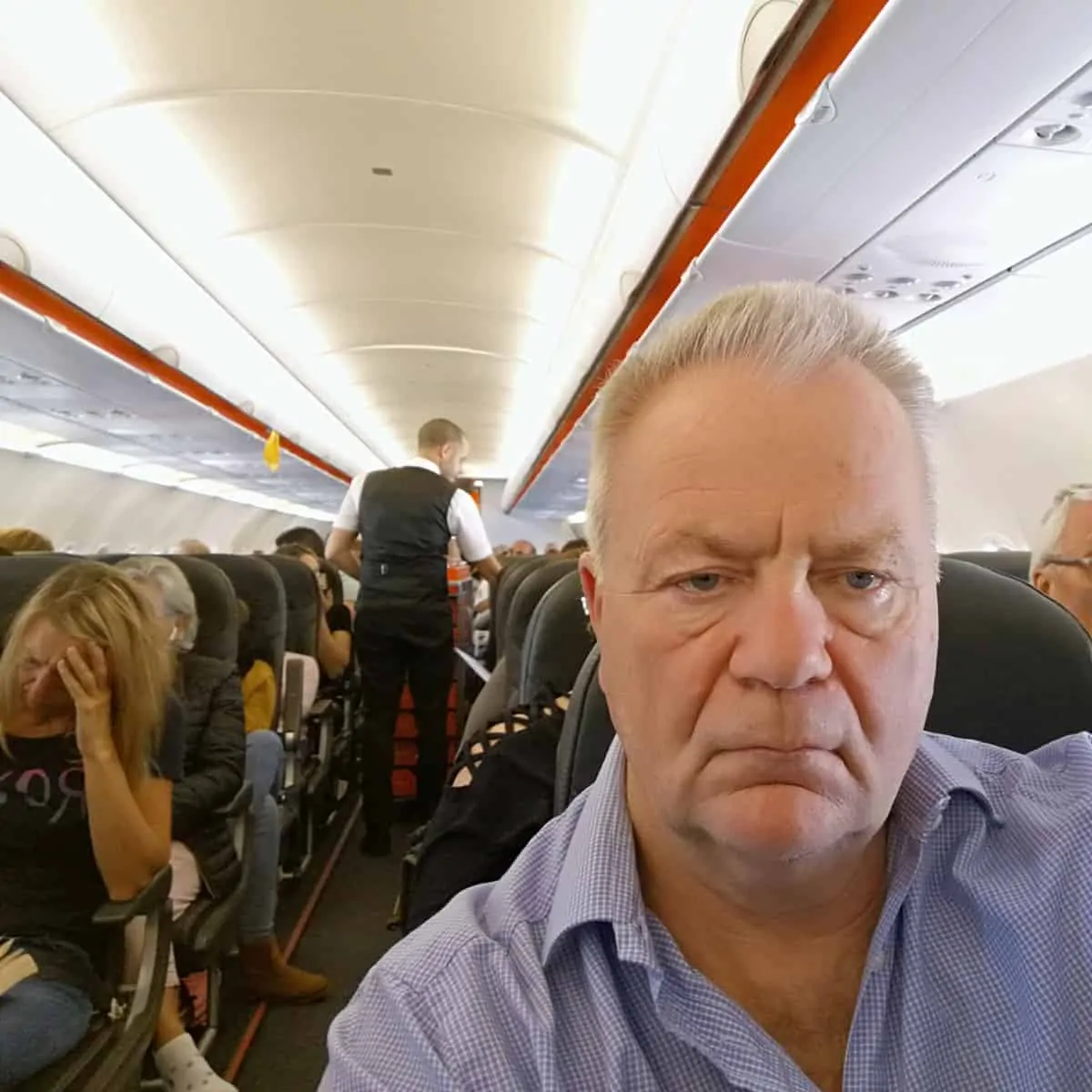
With rows
of empty seats and departures from tiny airports, subsidized flights are an oasis
of comfort and convenience in an aviation world of congestion and lines.
On a
recent Macon-to-Atlanta flight, Andrew Rudnicki breezed through a security
checkpoint where the six Transportation Security Administration screeners
nearly outnumbered the travelers.
Rudnicki,
an enlistee at nearby Robins Air Force Base, broke into a grin as he climbed
the plane's stairs, boarded the flight carrying his 2-year-old daughter and
saw just seven passengers scattered among the 50 seats.
"This
is comfortable. You don't feel like a sardine packed in a can," said
Rudnicki, who was flying home to Pittsburgh.
Many
subsidized flights are on smaller planes — 19- or 34-seat turboprops
— but even those feel roomy when few are aboard. The typical subsidized
flight was just 37% full in 2006, excluding those in Alaska, according to a
USA TODAY analysis of DOT and airline data.
That
means the Department of Transportation paid for nearly 2.4 million empty
seats in 2006, the analysis shows. The overall aviation system ran at 79% capacity
in 2006.
"Some
of the fares are low, no doubt," says Jonathan Ornstein, CEO of Mesa Air
Group, owner of Air Midwest. The airline charges $45 on average for a
50-minute flight between Joplin, Mo., and Kansas City.
"Communities
say, 'If you lower fares, we'll do some marketing and try to get people out
of their cars,' and it doesn't work," Ornstein says. "A family of
six is not going to fly on a 19-seater to Kansas City. They're going to
drive."
A huge
percentage of passengers on subsidized flights are business travelers who
would pay higher fares, Ornstein says, acknowledging some subsidies could be
reduced. "Their travel is not discretionary. Whether (a business
traveler) pays $90 or $140 is not relevant."
One
beneficiary of subsidies has been the airlines the DOT picks in competitive
bidding to run the flights. Great Lakes, whose business is largely subsidized
flights, went from post-9/11 red ink into the black in 2003, turning a small
operating profit three years ahead of the rest of the airline industry.
The
subsidies alone, excluding fares from subsidized flights, made up 30% of
Great Lakes' operating revenue in 2002-06, company reports show.
In 2001,
Mesa formed a lobbying group, Regional Aviation Partners, based in its
Phoenix headquarters, to push for more subsidy funding. The company has paid
$837,000 to run the group — "a good investment," Ornstein
says. Congress' subsidy allocation jumped from $50 million in 2001 to $113
million in 2002 in response to 9/11 and has stayed at roughly that level.
Mesa's
subsidy collections also jumped, from an average of $6.3 million in 1999-2001
to $15.4 on average from 2002 to 2006, according to company reports. Even so,
Ornstein says his company cannot make money on the program because fuel and
maintenance costs are rising faster than the subsidies.
Boyd, the
consultant, disagrees.
"It's
a hell of a gig," he says. "The government pays me to operate the
airplane. I make money regardless. Even if I don't carry passengers, that's
fine."
Take a
look at how subsidies from the federal Essential Air Service program worked
at selected small airports in 2006:
|
Community
|
Destination
|
Annual subsidy
|
Subsidy per passenger
|
Average passengers
per flight
|
|
![http://i.usatoday.net/_common/_images/ipr/grey.gif]()
|
|
El Dorado, Ark.
|
Dallas/Fort Worth
|
$923,456
|
$250
|
3.1
|
|
![http://i.usatoday.net/_common/_images/ipr/grey.gif]()
|
|
Devils Lake, N.D.
|
Minneapolis
|
$1,329,858
|
$203
|
5.7
|
|
![http://i.usatoday.net/_common/_images/ipr/grey.gif]()
|
|
Worland, Wyo.
|
Denver
|
$797,844
|
$187
|
4.2
|
|
![http://i.usatoday.net/_common/_images/ipr/grey.gif]()
|
|
Bradford, Pa.
|
Pittsburgh
|
$1,217,414
|
$174
|
3.6
|
|
![http://i.usatoday.net/_common/_images/ipr/grey.gif]()
|
|
Jamestown, N.Y.
|
Pittsburgh
|
$1,217,414
|
$135
|
4.7
|
|
![http://i.usatoday.net/_common/_images/ipr/grey.gif]()
|
|
Salina, Kan.
|
Kansas City
|
$487,004
|
$131
|
2.1
|
|
![http://i.usatoday.net/_common/_images/ipr/grey.gif]()
|
Sources:
Department of Transportation, USA TODAY analysis of DOT and airline data
|