[Archive Home][Date Prev][Date Next][Index]
"Unlocking mystery behind air fares"
Sunday, October 16, 2005
Unlocking mystery behind air fares
By Dan Fitzpatrick
The Pittsburgh (PA) Post-Gazette
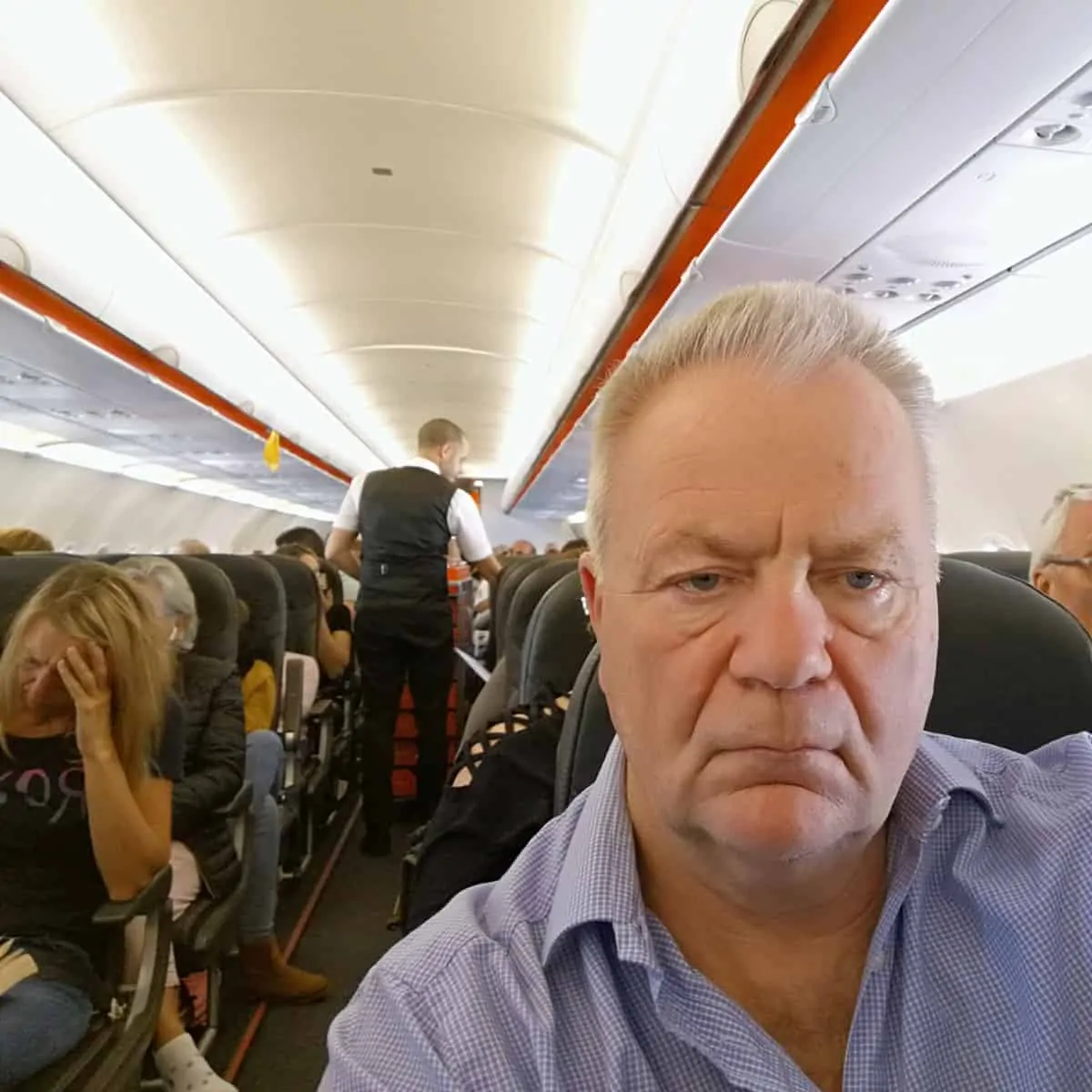
As a frequent business traveler, Downtown attorney Gene Kline knows he
typically shells out more for his ticket than the person seated next to him,
a person eating the same complimentary pretzels and breathing the same
pressurized air.
The longtime practice still irritates him.
"It seems to be price-gouging," Mr. Kline said.
But there is some science at work up there. Airlines, knowing that business
travelers are willing to pay more for last-minute convenience and comfort,
hold open a certain number of choice seats near exit rows and aisles for
deep-pocketed customers through a mysterious inventory-control process known
as "yield management."
Most flights on US Airways have six to 10 different fare categories -- or
"buckets" -- depending on when the ticket was bought and how restrictive it
is. The cheapest buckets, advertised heavily on commercials and the
Internet, often disappear weeks and months before the flight takes off --
and well before the business traveler discovers a need for a last-minute
trip.
"It is frustrating because no one wants to pay $200 and sit next to someone
who paid $100," said Bob Harrell, president of New York travel consulting
firm Harrell Associates. What most people do not realize, though, "is that a
different service was provided to one vs. the other."
The pricing of an airline ticket is half art, half science -- a process that
leans heavily on mathematical algorithms, historical patterns, human
appetite for risk and the laws of supply and demand.
Day-to-day and sometimes hour-to-hour, the price can go up and down based on
how full the plane is when the ticket is purchased.
If the flight books quickly, the airline will take away the cheaper seats
and add more expensive seats. The reverse will happen if the bookings are
slow. It is no different than a restaurant using early-bird specials to fill
tables before the dinner rush or a hotel charging more for reservations
during peak tourist seasons.
And like hotel bargains during a slow period during peak travel season,
airlines also slash fares in the days before a flight just to fill seats
with paying passengers that otherwise would go empty. The most obvious
example of this are the "e-savers" that airlines make available for travel
the following weekend.
"The law of supply and demand works overtime in the airline industry," said
Terry Trippler, a Minneapolis-based airline expert with Cheapseats.com.
"Then I think there are some dart boards involved, too."
Robert Crandall devised the multitiered pricing system while running
American Airlines in the 1970s and 1980s.
In the years after Congress deregulated the industry, start-ups tried to
undercut the majors with cheap prices on limited routes. Mr. Crandall
responded with discounts on the same routes, and advertised them as such.
Beyond the discounts, though, Mr. Crandall was able to predict how far in
advance people would book to certain locations by examining old patterns on
the airline's reservations system. That way he knew how many cheap seats to
set aside for those passengers.
The rest of the seats were reserved for last-minute business travelers, the
people who had the money and were willing to pay for the convenience -- a
trade-off that maximized revenue for the carrier upon takeoff.
But the pricing strategy, while beneficial to the airline, confused
travelers.
It still does.
A joke around the new US Airways headquarters in Tempe, Ariz., is that fares
are set by a "pricing monkey" -- a picture of one even hangs in the
airline's pricing department.
"To an average consumer, it does sometimes seem that way," conceded Scott
Kirby, US Airways' executive vice president of sales and marketing.
Prices on any route can change day by day, or hour by hour, as much as 11
months in advance, in part because the entire process is transparent. That
is, airlines share their fares with each other, allowing each to set its
pricing not only in response to supply and demand but in response to what
competitors are charging.
Here's how it works: Airlines receive fares updates three times a day -- at
10:30 a.m., 1 p.m. and 8 p.m. during the week and once a day on Saturday and
Sunday -- from the Airline Tariff Publishing Co., a for-profit company owned
by 24 international carriers. The company tracks the fare changes on two
mainframe computers from Washington's Dulles Airport and distributes them to
all reservation systems and airlines simultaneously.
When airlines receive the fare information about their competitors, it
forces thousands or millions of split-second decisions about whether to
match prices up or down, or adjust a plane's pricing distribution based on
the pace of bookings. US Airways, for example, has 2,000 flights a day.
Looking ahead at demand for the next 335 days means examining 730,000
flights. The number of fares on those flights could be in the millions.
"It's actually mind-boggling," Mr. Trippler said.
It helps that the speed and ability of computers to dissect and analyze all
the pricing information has improved dramatically over the years since Mr.
Crandall devised the yield-management system in the late 1970s. But pricing
executives still have to sign off on any changes. The most volatile period
is 30 to 45 days before a flight, when most people begin to book.
Sometimes, the airlines override the computers. For example, America West
Airlines decided to make fewer discount seats available last summer,
contrary to the computer's recommendation, believing that the demand would
be higher than expected.
"That is a big risk," said Mr. Kirby, who was at America West then before
the carrier merged last month with US Airways.
"When you do something like that, if demand is not strong and competitors
sell at a discount," the airline could lose customers and big chunks of
revenue. "The art is maintaining fairness to the consumer and to forecast
future demand," Mr. Kirby added.
Due to changes in the industry, however, yield management is not the tool it
used to be, according to Kevin Mitchell of the Business Travel Coalition.
No longer can airlines always get away with charging artificially high fares
to business travelers. Post 9/11, more executives began taking trains or
cars, or simply opted to stay in the office, conducting a far-flung meeting
via teleconference instead. Or, they booked farther ahead and used the
Internet to find the cheapest fares, just like leisure travelers are doing.
As a result, the gap between fares charged to leisure and business travelers
is narrowing. A year ago, the ratio of business-to-leisure fares was 6-to-1,
according to figures provided by Harrell Associates. By this month, the
ratio had dropped to 4-to-1. Locally, leisure fares have increased by 14
percent in the Pittsburgh market while business fares have dropped 26
percent in the past year.
In addition to the Internet, pressure to lower fares and make pricing less
complex have come from low-cost carriers such as JetBlue and Southwest
Airlines that now control more than 30 percent of the market.
Not only do JetBlue and Southwest sometimes offer fewer and cheaper fares,
but they also place a cap on the highest amount, so consumers always know
the most they will pay even if booking at the last minute. "The integrity of
that offering tends to bring true loyalty," Mr. Mitchell said.
Bigger, older carriers have started to do the same, and experts predict that
will continue. Delta Air Lines shook up the industry last year when it
capped fares at $499 and sliced many high-end business fares by 50 percent.
But even Southwest and JetBlue utilize yield management to maximize revenue
on each flight. The cheaper buckets sell first, leaving the more expensive
seats for last-minute travelers.
"They are not idiots," said Mr. Harrell, the New York travel consultant.
"They are smart enough to see there are two types of travelers -- the
price-sensitive and those who are less price-sensitive. Even though they
recognize this is an area that may frustrate some travelers, they are
obligated to produce the best return for their shareholders."
"I don't think there is a carrier in the world that has one fare," Mr.
Harrell said.
Do you have an opinion about this story?
Share it with other readers in our CAA Discussion Forums
http://www.californiaaviation.org/dcfp/dcboard.php
*****************************************
Fair Use Notice
This site contains copyrighted material the use of which has not always been specifically authorized by the copyright owner. We are making such material available in our efforts to advance understanding of political, human rights, economic, democracy and social justice issues, etc. We believe this constitutes a 'fair use' of any such copyrighted material as provided for in section 107 of the US Copyright Law. In accordance with Title 17 U.S.C. Section 107, the material on this site is distributed without profit to those who have expressed a prior interest in receiving the included information for research and educational purposes. For more information go to: http://www.law.cornell.edu/uscode/17/107.html. If you wish to use copyrighted material from this site for purposes of your own that go beyond 'fair use', you must obtain permission from the copyright owner.
If you have any queries regarding this issue, please Email us at stepheni@cwnet.com